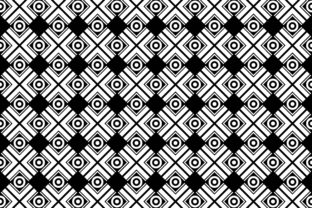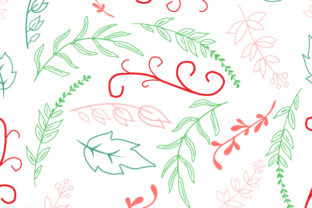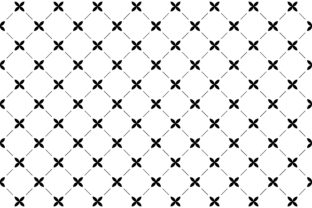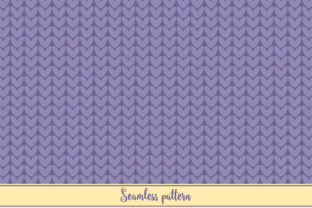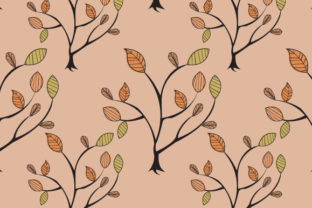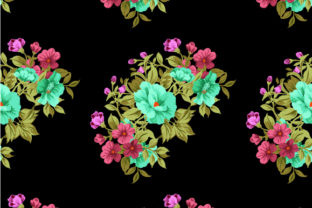
Colorful Vector Textile Pattern: When Seamless Design Meets Scalable Precision
A Colorful Vector Textile Pattern is a digitally created, repeatable surface design built entirely in vector format—meaning it’s mathematically defined, infinitely scalable, and resolution-independent. Unlike raster-based fabric textures or scanned hand-drawn motifs, this type of pattern retains crisp clarity at any size, from a business card swatch to a 20-foot-wide trade show backdrop. Its “colorful” designation reflects intentional, balanced chromatic diversity—not just high saturation, but thoughtful hue relationships, contrast control, and harmonious transitions across the repeat tile. What makes it distinct isn’t just visual appeal, but structural integrity: it’s engineered as a seamless pattern, where edges align perfectly so tiling produces no visible breaks, gaps, or misalignments.
How It Differs from Other Textile Pattern Formats
Not all textile patterns behave the same way in production or digital workflows—and understanding those differences helps avoid costly revisions or unexpected limitations. A Colorful Vector Textile Pattern stands apart primarily through its file architecture and scalability behavior.
Raster-based textile textures (e.g., high-DPI JPGs or PNGs) rely on fixed pixel grids. While they can simulate rich texture and subtle grain, they lose fidelity when enlarged beyond their native dimensions—leading to blurriness or pixelation. In contrast, the vector EPS file included with a Colorful Vector Textile Pattern contains paths, anchors, and Bezier curves. That means it scales cleanly for embroidery digitizing, laser-cut fabric templates, or large-format printing without interpolation or quality loss.
Seamless raster repeats often require manual edge blending, cloning, or offset adjustments in Photoshop—a time-intensive process prone to subtle mismatches. A true seamless vector pattern, however, is constructed using precise alignment tools (like Illustrator’s Pattern Options panel), ensuring mathematical continuity across the tile boundary. The result is consistent, predictable tiling across any software environment that supports EPS—whether Adobe Creative Suite, CorelDRAW, or professional RIP (raster image processor) systems used in textile mills.
Practical Use Cases Where This Format Excels
The combination of color richness, vector precision, and seamless tiling makes this resource especially well-suited for specific professional scenarios:
- Product prototyping for fashion and home goods: Designers developing capsule collections or upholstery lines can apply the pattern directly to 3D garment mockups or furniture renders—scaling effortlessly across varied surface curvatures and dimensions.
- Print-on-demand integration: Platforms like Spoonflower or Printful accept vector uploads for fabric printing. A properly constructed Colorful Vector Textile Pattern ensures accurate color registration and edge alignment across yardage, minimizing waste and reprints.
- Cross-medium adaptation: Because the EPS preserves editable layers and color groups, designers can quickly isolate elements—swap Pantone references, adjust spacing, or extract individual motifs for branding applications—without rebuilding from scratch.
- Educational and studio use: Art and design instructors use these files to demonstrate repeat construction logic, color theory application in context, and vector workflow best practices—providing students with production-ready examples rather than simplified abstractions.
Tradeoffs and Realistic Limitations
No format is universally optimal—and the strengths of a Colorful Vector Textile Pattern come with inherent constraints worth acknowledging upfront.
First, vector patterns excel at clean lines, flat fills, and geometric or stylized organic forms—but they’re less suited to simulating complex physical textures like watercolor bleed, ink diffusion, or woven fiber depth. If your project requires photorealistic fabric simulation (e.g., for textile engineering testing or hyperrealistic product photography), a high-fidelity raster scan or procedural texture may be more appropriate—even if it sacrifices scalability.
Second, while the EPS file offers full editability, not all users have access to vector-editing software—or the expertise to modify anchor points, recolor global swatches, or adjust tile dimensions without breaking seamlessness. In such cases, the accompanying JPG serves a practical role: it’s immediately viewable, embeddable in presentations or mood boards, and usable in platforms that don’t support EPS (e.g., basic web CMS editors or social media tools). But it should be treated as a reference or preview—not a production asset for scaling.
Third, color accuracy depends heavily on output conditions. The vibrant palette in the vector file may shift slightly when converted to CMYK for screen printing or when rendered on uncalibrated monitors. Always soft-proof against your intended output profile, and request physical proofs when color fidelity is mission-critical.
When to Choose This Over Alternatives
A Colorful Vector Textile Pattern becomes the strongest choice when three conditions converge: you need scalability across multiple output sizes, you require precise, editable color and layout control, and your aesthetic direction favors intentional, graphic-driven repetition over photographic realism.
For example, a small-batch apparel brand launching a summer line might compare options before finalizing print assets. A hand-painted watercolor repeat (delivered as JPG only) offers warmth and uniqueness but risks inconsistency when scaled to sleeve cuffs versus full-panel dresses. A generative AI textile pattern may deliver novelty quickly but often lacks reliable seamlessness or color-managed output. In contrast, a professionally crafted Colorful Vector Textile Pattern gives that brand editable, production-ready geometry—enabling them to lock in a cohesive look across T-shirts, tote bags, and packaging, all from one source file.
Similarly, an interior designer specifying custom wallcoverings for a commercial space may evaluate whether to commission original artwork or license existing patterns. Licensing a Colorful Vector Textile Pattern provides immediate access to vetted, technically sound repeats—reducing lead time compared to bespoke illustration—while still allowing for customization (e.g., adjusting scale to suit ceiling height or recoloring to match branded palettes).
Key Decision Factors to Weigh
Before selecting or commissioning a Colorful Vector Textile Pattern, consider these practical questions:
- What’s your primary output medium? If most use is digital-only (e.g., website backgrounds, social tiles), a high-res JPG may suffice. If physical production is involved—even occasionally—vector scalability becomes essential.
- Do you need to modify the pattern post-acquisition? If yes, verify software compatibility and assess your team’s vector literacy. Otherwise, confirm whether the provider offers customization services.
- How critical is color consistency across substrates? Request a color-managed preview file (e.g., PDF/X-4 with embedded ICC profiles) and clarify whether the pattern includes spot-color-ready separations for screen printing.
- Is motif density or scale flexibility important? Some vector patterns are built at fixed tile sizes (e.g., 12" × 12"). Others allow non-destructive scaling within the pattern definition—check documentation or ask for a test tile.
In summary, a Colorful Vector Textile Pattern isn’t merely a decorative element—it’s a functional design asset shaped by technical discipline and creative intention. Its value emerges not in isolation, but in how reliably it performs across your specific pipeline: from concept to prototype, from screen to fabric, from idea to execution. When matched thoughtfully to your goals, tools, and constraints, it bridges aesthetic vision with production reality—without compromise on clarity, color, or continuity.