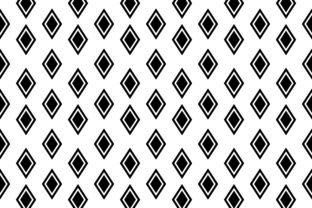
Diamond Seamless Pattern: A Versatile Design Essential for Creators and Businesses
Whether you're designing a website background, printing fabric for a boutique clothing line, or developing packaging for an eco-friendly product, the Diamond Seamless Pattern offers quiet elegance with powerful functionality. Unlike one-off graphics or tiled repeats that reveal visible seams, this pattern flows endlessly—corner to corner, edge to edge—without disruption. Its subtle geometry lends sophistication without overwhelming, making it a go-to choice across industries and skill levels.
What Makes a Diamond Seamless Pattern Truly Seamless?
A diamond seamless pattern isn’t just a diamond-shaped motif repeated in rows. True seamlessness means the top edge aligns perfectly with the bottom, and the left matches the right—so when tiled digitally or printed across large surfaces, no lines, gaps, or misalignments appear. This is achieved through precise offsetting, careful mirroring, and pixel-perfect (or vector-accurate) edge matching during creation.
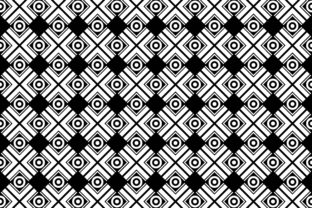
At its core, the pattern relies on a repeating unit—often a square or rhombus—that contains a balanced arrangement of diamond shapes. These diamonds may be outlined, filled, shaded, rotated, or layered with transparency. What sets high-quality versions apart is how naturally the repetition breathes: no visual “jumps,” no forced symmetry, and consistent spacing whether scaled up for a billboard or down for a favicon.
Key Characteristics That Define Quality
- Edge continuity: The top row’s bottom edge is identical to the bottom row’s top edge—and same for left/right boundaries.
- Scalability: Works equally well at 50px thumbnails and 5000px banners—especially critical for vector-based diamond seamless pattern files.
- Neutral visual weight: Doesn’t compete with foreground content—ideal for UI backgrounds, stationery, or textile underprints.
- Adaptable color palettes: Easily recolored to match brand guidelines without breaking repeat logic.
Who Benefits Most from Using This Pattern?
The Diamond Seamless Pattern bridges practicality and aesthetic appeal—making it valuable far beyond decorative use. Here’s who reaches for it—and why:
Web & App Designers
Backgrounds built with a diamond seamless pattern add depth and texture without slowing load times (especially SVG or optimized PNG versions). Unlike complex gradients or photos, it’s lightweight, accessible, and WCAG-compliant when contrast is considered. Designers often layer it subtly beneath cards or forms to create visual hierarchy—never distracting, always grounding.
Fashion & Textile Professionals
In apparel and home goods, this pattern translates beautifully to woven jacquard, digital fabric printing, and embroidery. Its inherent rhythm mimics natural weaves and lends structure to soft materials. A muted gray-on-ivory diamond seamless pattern, for example, reads as refined linen—perfect for luxury bedding or minimalist workwear.
Branding & Marketing Teams
Consistency matters—and a custom diamond seamless pattern can become part of a brand’s visual language. Think of it as the “wallpaper” behind your identity: used in presentation decks, email footers, trade show backdrops, or even engraved onto reusable packaging. It reinforces recognition without shouting.
Print & Packaging Designers
When wrapping products—from artisanal soap bars to tech accessories—a seamless diamond motif adds tactile sophistication. Because it repeats flawlessly across curved or irregular surfaces (when applied correctly), it avoids the awkward cutoffs common with non-seamless graphics. Bonus: many printers prefer seamless tiles for predictable ink distribution and registration.
Real-World Applications You Can Try Today
- Website hero section overlay: Apply a low-opacity diamond seamless pattern over a gradient to soften transitions and add micro-texture—no CSS tricks needed.
- Custom notebook or journal covers: Print on matte paper with spot UV coating over select diamonds for subtle shine and dimension.
- Social media templates: Use as a base layer in Canva or Figma for Instagram carousels—ensures cohesion across multiple posts.
- 3D mockup textures: Import into Blender or Substance Painter to wrap product prototypes with realistic fabric or metal-like finishes.
- SVG animation: Animate individual diamonds using CSS transforms—rotate, scale, or fade them in sequence for interactive landing pages.
Strengths—and When to Pause and Consider Alternatives
The Diamond Seamless Pattern shines in versatility, subtlety, and technical reliability. But like any tool, it has context-dependent limits:
- Strength: Extremely forgiving for non-designers—easy to apply, recolor, and scale without training.
- Strength: Performs well in both digital and physical mediums, including embroidery software that auto-detects repeat units.
- Consideration: Overuse can dilute impact. If every surface in your brand system uses the same diamond repeat, it may begin to feel generic—not distinctive.
- LIMITATION: Not ideal for high-contrast, attention-grabbing campaigns where bold typography or photography needs full dominance. In those cases, reserve it for secondary elements only.
- Practical expectation: Even the best diamond seamless pattern won’t fix poor color contrast or inappropriate sizing. Always test at actual display dimensions—and on real devices or print proofs.
Evaluating Suitability for Your Project
Before downloading or commissioning a diamond seamless pattern, ask yourself three questions:
- What’s the primary function? Is it supporting content (background), defining identity (brand element), or serving production needs (fabric repeat)? Match the pattern’s density and scale accordingly—tighter diamonds for fine textiles, bolder ones for signage.
- Where will it live? Digital-only? Then prioritize SVG or WebP formats. For embroidery, request DST or PES files with stitch optimization notes. For large-format printing, confirm resolution (300 DPI at final size) and bleed tolerance.
- Do you need customization? Many free resources offer basic versions—but for branding, consider adapting spacing, stroke weight, or corner treatments to reflect your voice. A slight rotation (e.g., 12° instead of 0°) or dual-tone fill can make it unmistakably yours.
Getting Started—Without Overcomplicating Things
You don’t need advanced software to begin. Free tools like Inkscape (vector) or GIMP (raster) support seamless tile creation. Tutorials abound for building your own Diamond Seamless Pattern from scratch—even if you’re starting with a single diamond shape drawn in PowerPoint.
For immediate use, search trusted sources using terms like “diamond seamless pattern SVG”, “free diamond repeat PNG”, or “seamless diamond vector pack”. Filter by license type (especially for commercial projects), and always verify seamlessness by tiling the image in your editor before committing.
Remember: the most effective patterns serve silently. A great diamond seamless pattern doesn’t draw attention to itself—it elevates everything around it. Whether you're launching a startup, refreshing a portfolio, or sourcing materials for a craft fair, this unassuming geometry offers grounded, timeless utility. And sometimes, the quietest design choices make the strongest impression.