Small Flowers for Textiles: Seamless Floral Patterns That Just Work
Imagine you’re designing a new line of organic cotton baby blankets. You need a soft, timeless floral motif—small-scale, balanced, and endlessly repeatable. Or picture yourself updating your Etsy shop’s packaging: gift wrap that feels handmade but prints cleanly at scale. Maybe you’re a teacher prepping spring-themed classroom posters, or a freelance graphic designer building a brand identity for a local florist. In all these cases, Small Flowers for Textiles isn’t just another clipart pack—it’s a practical, production-ready solution built for real workflows.
What It Actually Is (and Why the Details Matter)
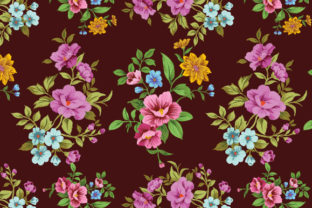
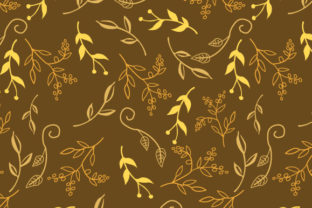
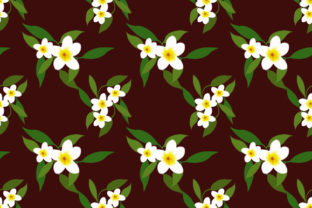
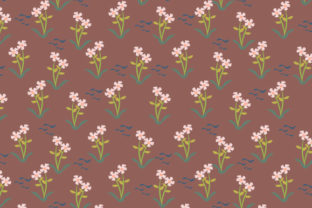
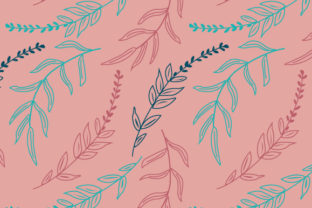
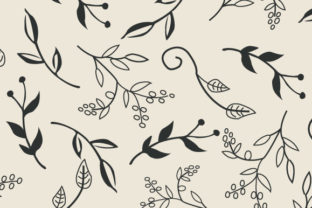
Small Flowers for Textiles is a seamless floral pattern designed specifically for fabric printing, surface design, and print-on-demand applications. Unlike generic floral vectors you might find in broad stock libraries, this one was created with textile constraints and visual harmony in mind: consistent spacing, no visual “jumps” at tile edges, and a delicate balance of bud, bloom, and leaf that reads clearly even at small sizes (think 1–3 cm repeats on cotton fabric). It ships with two essential file formats: a scalable vector EPS for precise resizing in Illustrator or Affinity Designer, and a high-resolution JPG (300 DPI, CMYK-ready) for quick use in Canva, Photoshop, or direct upload to print services like Spoonflower or Printful.
Where People Actually Use It—Not Just Where It *Could* Be Used
Real usage rarely matches marketing brochures. Here’s how people are applying Small Flowers for Textiles right now:
- A small-batch apparel brand printed it onto lightweight linen for limited-edition tote bags—no color shifts, no alignment headaches, because the seamless repeat eliminated visible seams across wide fabric rolls.
- A stationery maker used the EPS file to recolor individual blooms in Pantone 12-1107 TCX (a soft sage green), then layered it over cream kraft paper for wedding thank-you cards—keeping the texture visible while adding subtle, cohesive pattern.
- An interior designer scaled the JPG up 400% and printed it as wallpaper for a nursery wall. Because the pattern is truly seamless and low-contrast, it added warmth without overwhelming the space—or competing with hand-painted mural accents.
- A homeschooling parent printed the pattern on iron-on transfer paper, then applied it to plain cotton pillowcases for a themed “botany unit” project—kids traced leaves and labeled parts directly on the fabric.
Why “Small Flowers” Isn’t Just About Size—It’s About Function
“Small” here refers to both scale and visual weight—not just tiny blossoms, but a composition that breathes. Larger florals can dominate a textile, making it hard to pair with other elements or cut efficiently for garment patterns. With Small Flowers for Textiles, the motif sits comfortably in the background: it enhances rather than competes. That makes it ideal for quilting cottons where piecing accuracy matters, for notebook covers where durability meets daily handling, or for digital scrapbooking kits where users layer photos and journaling without visual clutter.
And “seamless” isn’t just a buzzword—it means no trial-and-error tiling in Photoshop. You drop the EPS into your layout, set the repeat, and export. No hunting for misaligned stems or awkward gaps between tiles. That saves time whether you’re batch-printing 50 postcards or prepping files for a fabric mill’s technical spec sheet.
Who Benefits—and How Their Needs Shape the Use
A freelance surface pattern designer uses the EPS to build custom colorways for client pitches—changing palettes in seconds, not hours. A craft blogger embeds the JPG into a printable PDF guide for “DIY Fabric Dyeing,” knowing readers will print it clearly on home inkjets. A boutique publisher selects it for endpapers in a poetry chapbook—its quiet rhythm supports the text instead of distracting from it.
Even educators rely on it differently: one art teacher uses the vector file to demonstrate repeat pattern math (translational symmetry, unit cell construction) using free tools like Inkscape; another downloads the JPG to create tactile texture rubbings with crayons and tracing paper—no tech required.
What to Check Before You Commit (Because Not Every Floral Pattern Fits Every Need)
Before downloading or licensing Small Flowers for Textiles, ask yourself three things:
- Is your output medium forgiving? If you’re printing on textured burlap or uncoated newsprint, a highly detailed JPG may lose definition. In those cases, the EPS gives you full control over stroke weight and simplification.
- Do you need commercial rights—and what kind? This pattern includes standard commercial use (e.g., selling finished goods), but always verify if your platform (like Redbubble or Zazzle) requires extended licenses for POD. The documentation included clarifies exactly what’s covered.
- Does your workflow match the file types? If you only use Canva or Google Slides, the JPG will serve you well. But if you’re preparing files for screen printing or embroidery digitizing, the EPS becomes indispensable for clean path editing and spot-color separation.
Subtle Things That Add Up in Practice
You’ll notice the stems curve gently—not rigidly vertical—so when repeated, they create soft rhythm instead of grid-like stiffness. The flowers vary slightly in openness (some buds, some half-open, a few fully bloomed), avoiding mechanical repetition. And the color density is calibrated: light enough to keep cotton fabric breathable, rich enough to hold up on dark denim or charcoal wallpaper.
That attention shows up in outcomes: fewer customer returns for “pattern looks blurry up close,” smoother approvals from print vendors, less time spent tweaking alignment before sending to press.
One Pattern, Many Lifecycles
This isn’t a one-off decoration. It’s a tool that evolves with your work: start with the JPG for fast mockups, switch to the EPS when refining for production, then reuse the same asset for social media banners, email headers, or product labels—keeping visual continuity across touchpoints without re-creating anything.
Whether you’re stitching a quilt block at midnight, prepping a client presentation before sunrise, or helping a child glue petals onto a handmade card—Small Flowers for Textiles stays quietly useful. No fanfare. No friction. Just a floral pattern that behaves the way fabric, paper, and pixels actually do.