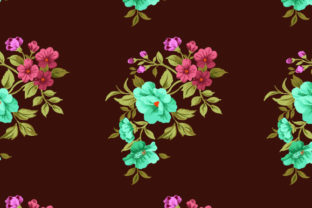
Elegance Seamless Pattern with Floral: A Practical Guide for Designers and Print Professionals
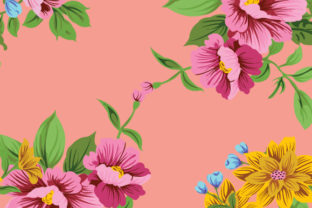
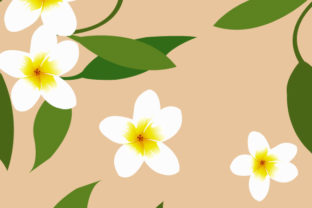
The Elegance Seamless Pattern with Floral is a curated digital textile design resource—specifically a vector-based, repeatable surface pattern that combines refined botanical motifs with precise technical execution. Unlike generic floral repeats or hand-drawn scans, this pattern is built for real-world application: it tiles without visible seams, maintains crisp detail at any scale, and balances ornamental richness with visual breathing room. Its distinction lies not just in aesthetics but in functional readiness—designed from the outset for textile printing, surface decoration, and scalable digital use.
What Makes This Pattern Stand Out Technically?
At its core, the Elegance Seamless Pattern with Floral delivers two key technical advantages: true seamlessness and vector fidelity. The repeat is mathematically aligned—no offset gaps, no blurred edges, no manual patching required when tiled across fabric, wallpaper, or web backgrounds. Because it’s delivered as an EPS vector file, designers retain full editability: colors can be adjusted, elements repositioned, and scale modified without pixelation. The included high-resolution JPG serves as a reliable preview and raster fallback for platforms or workflows that don’t support vector imports.
This dual-format approach reflects a practical understanding of real production pipelines. Vector files are essential for screen printing, embroidery digitizing, or CAD-integrated textile development; JPGs remain necessary for mockups, CMS uploads, or client presentations where simplicity and compatibility trump editability.
How It Compares to Other Floral Pattern Options
Not all floral patterns serve the same purpose—or perform the same way in practice. Here’s how the Elegance Seamless Pattern with Floral fits within broader categories:
- Hand-drawn or scanned floral repeats: Often rich in character but rarely seamless without significant manual correction. Scaling introduces softness or artifacts; color separation for print may require redrawing layers.
- Photographic floral textures: Useful for organic backdrops, but lack repeatability and control over motif density, spacing, or color harmony. Not suitable for fabric yardage or tile-based applications.
- Algorithmic or AI-generated floral patterns: Can produce novelty quickly, but often lack intentional rhythm, balanced negative space, or print-ready registration. Seamlessness isn’t guaranteed—and editing individual elements is typically impossible.
- Generic clipart-style floral borders or motifs: Designed for single-use placement—not tiling. Repeating them manually risks misalignment and visual fatigue.
In contrast, the Elegance Seamless Pattern with Floral bridges intention and utility. Its composition follows classical principles of textile design: alternating motif size, subtle directional flow, and deliberate contrast between line weight and fill areas. That doesn’t mean it’s “traditional” by default—it supports modern palettes, minimalist cropping, or layered overprints—but it avoids the unpredictability of generative tools or the labor overhead of retrofitting non-seamless assets.
Strengths and Real-World Fit
The primary strength of this pattern is reliability in production contexts. For example:
- A fashion designer developing a small-batch linen collection can drop the EPS directly into Adobe Illustrator, assign Pantone values, and export separations for screen printing—without rebuilding the repeat.
- An interior designer specifying custom wallpaper for a hospitality project can verify tile alignment in Photoshop using the JPG, then supply the vector to the manufacturer for large-format digital printing.
- A web designer creating a branded background for a boutique e-commerce site can use the JPG at 2× resolution for Retina displays, confident the repeat won’t show ghosting or edge artifacts.
It also scales well across media. Because the vector retains clean curves and consistent stroke weights, the pattern holds up whether printed on silk scarves (where fine detail matters) or applied to ceramic tile decals (where clarity at mid-range viewing distance is key). The floral elements are stylized—not photorealistic—so they avoid looking dated or overly literal, supporting both contemporary and timeless brand identities.
Tradeoffs and Situational Limitations
No single pattern suits every need—and awareness of limitations helps avoid mismatched expectations. The Elegance Seamless Pattern with Floral is intentionally versatile, not hyper-specialized. That means:
- It’s not optimized for ultra-minimalist applications requiring near-abstract geometry—think Scandinavian-inspired monochrome repeats with strict grid discipline.
- It doesn’t include alternate colorways or motif variations out of the box. Users who need multiple coordinated versions (e.g., light/dark variants, seasonal palettes) will need to adjust colors manually or commission adaptations.
- While the floral motifs are original and cohesive, they’re not bespoke. If a brand requires exclusive, legally defensible artwork tied to its visual identity system, licensing a custom-designed pattern may be more appropriate.
- The JPG is high-resolution but fixed. It cannot be resized beyond its native dimensions without quality loss—unlike the EPS, which remains infinitely scalable.
These aren’t flaws—they’re design parameters. They reflect a focus on broad usability rather than narrow customization. That makes the pattern especially useful during early-stage exploration, prototyping, or when time or budget constraints limit options for fully commissioned work.
When to Choose This Pattern—and When to Look Elsewhere
The Elegance Seamless Pattern with Floral is often the right choice when:
- You need a professional-grade, print-ready floral repeat with zero setup time.
- Your workflow includes both vector and raster environments—and you want consistency across them.
- You value balanced composition: enough detail to feel intentional, enough openness to avoid visual clutter.
- You’re evaluating options for apparel, home textiles, stationery, or digital branding—and want to test how a floral motif behaves at scale before committing to custom development.
Conversely, consider alternatives if:
- Your project demands legal exclusivity—such as a signature pattern for a luxury brand launch.
- You’re working with strict accessibility requirements (e.g., high-contrast UI backgrounds), and the floral density or color contrast needs precise, iterative tuning beyond what the provided files allow.
- You require animated or interactive pattern behavior (e.g., parallax scrolling, responsive tiling)—in which case SVG-based solutions with embedded code may offer more flexibility.
- Your output medium has unusual constraints—for instance, laser-cut leather where motif line weight must match material thickness tolerances. In those cases, engineering-specific adaptation is usually needed.
Making an Informed Decision
Choosing a pattern isn’t just about visual preference—it’s about matching technical properties to your intended use, team capabilities, and delivery requirements. The Elegance Seamless Pattern with Floral excels where predictability, scalability, and cross-format consistency matter most. It reduces friction in handoff between design, prepress, and production teams—especially valuable in freelance, agency, or small-studio settings where resources are constrained.
That said, comparing it against other floral patterns shouldn’t be about “best” or “worst,” but about fit. Ask yourself: Does this asset integrate smoothly into my current software stack? Will it survive scaling across physical and digital outputs? Can I adjust it confidently—or do I need someone else to do it for me? If the answer to the first two is yes, and the third is manageable, then this pattern offers tangible efficiency without compromising aesthetic integrity.
Ultimately, the value of the Elegance Seamless Pattern with Floral lies in its balance: decorative enough to convey sophistication, structured enough to function reliably, and flexible enough to adapt—without demanding extensive rework.